Eclipse plus Perseids, why the night of August 12, 2026 will be unrepeatable
The same day brings Spain's first total solar eclipse in 121 years and the Perseid meteor shower peaking under a moonless sky. Two world-class sky shows in one night, no equipment needed.

In 40 words. On August 12, 2026 the Sun goes dark at sunset over Spain and that same night the Perseids peak with no Moon to wash them out. Totality in the evening, shooting stars until dawn.
Some summers get lucky, and then there is 2026. The very night Spain lives its first total solar eclipse in 121 years, the sky has its August classic scheduled, the Perseid maximum. With one detail that changes everything.
The coincidence that makes it perfect
A total solar eclipse only happens at new Moon, when the Moon slides exactly between the Sun and us. Which means the night of August 12 to 13 will have no Moon at all. Moonlight is precisely what ruins the Perseids most years, washing out the fainter meteors. In 2026 the floodlight is off all night. Black sky, textbook conditions.
What the Perseids actually are
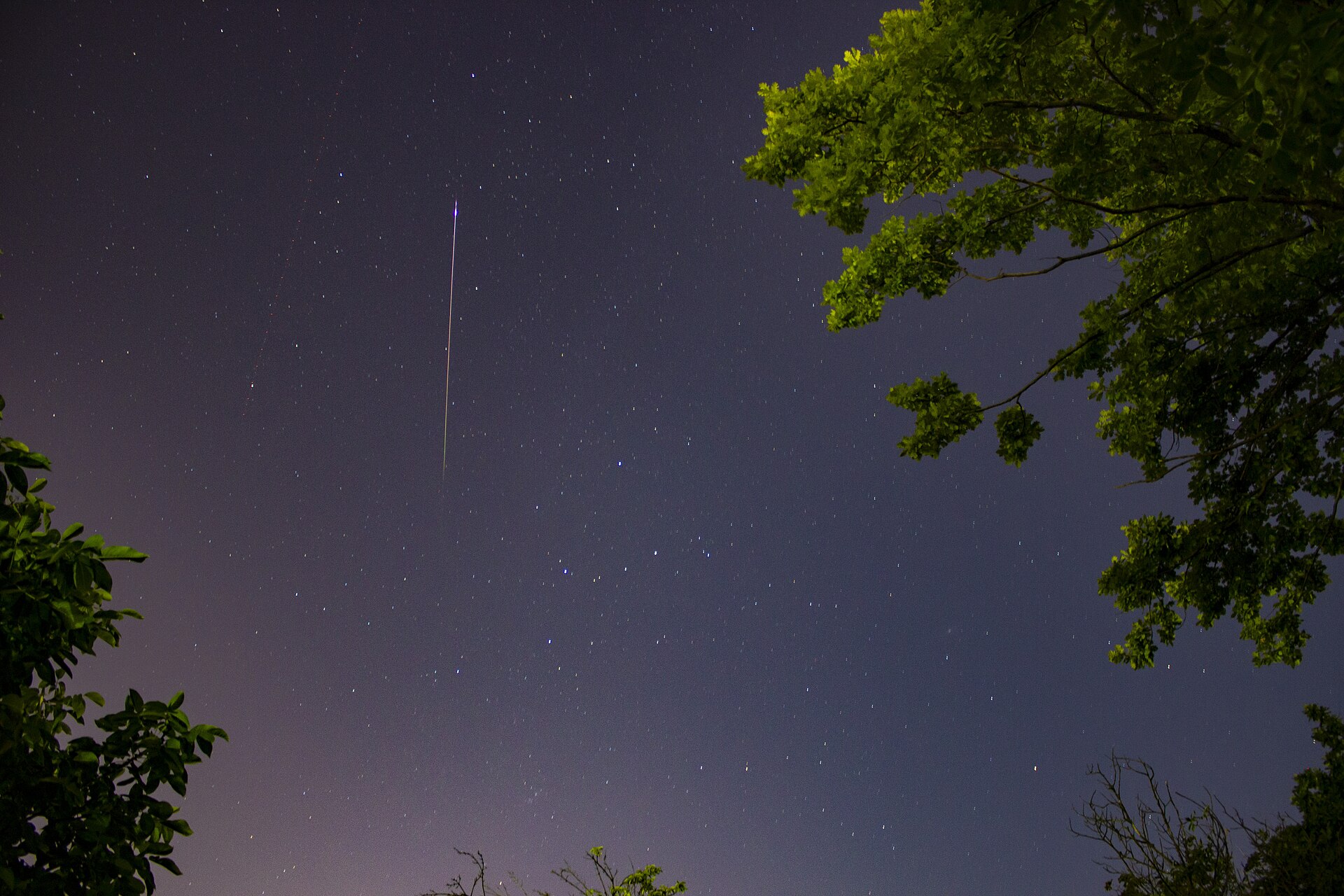
Every August, Earth ploughs through the dust trail left by comet Swift-Tuttle. Each grain, sand-sized, hits the atmosphere at about 59 kilometers per second and burns into a streak of light. That is a Perseid. Under a properly dark sky, the peak can serve on the order of a hundred meteors per hour. Comet dust burning 60 kilometers above your head, dressed up by tradition as the tears of Saint Lawrence.
The sky never sleeps.
Eclipses, meteor showers, launches… Every Sunday I send you the week’s sky events you can’t miss. Free.
The full-night plan
- Sunset. Eclipse totality with the Sun near the horizon, certified
- glasses on for the partial
- phases, bare eyes during totality.
- From 23:00. The shower's radiant in Perseus climbs the northeastern
- sky. The higher it gets, the more meteors.
- 02:00 to 05:00, prime time. Lie back and watch the whole sky, not
- just Perseus, because streaks cross everywhere. No telescope, no
- binoculars. The naked eye is the right instrument.
- Leave the phone in your pocket. Every screen glance costs you ten minutes
- of night vision.
Pick the same kind of spot as for the eclipse, far from streetlights with a wide horizon. If you stayed inside the totality band, you are already in the right place. Just stay awake.
Frequently asked questions
When do the Perseids peak in 2026?
On the night of August 12 to 13, the same night as the total solar eclipse in Spain. Nearby nights also deliver meteors, just fewer of them.
Do I need a telescope to watch the Perseids?
No, the opposite. Meteors cross wide stretches of sky and any instrument narrows your view. Naked eye, lying down, with patience, wins.
How many shooting stars will I see per hour?
Under ideal dark skies, on the order of a hundred per hour at the peak. From a small town with some light pollution, noticeably fewer, and from a city center only the brightest.
Sources
- IGN, total solar eclipse of August 12, 2026
- International Meteor Organization, meteor shower calendar
The sky never sleeps.
Eclipses, meteor showers, launches… Every Sunday I send you the week’s sky events you can’t miss. Free.