Where and when to watch the total solar eclipse of August 12, 2026 in Spain
Spain sees its first total solar eclipse since 1905 this Wednesday at sunset. The path of totality, exact times, and the one mistake that could ruin it, with official IGN data.
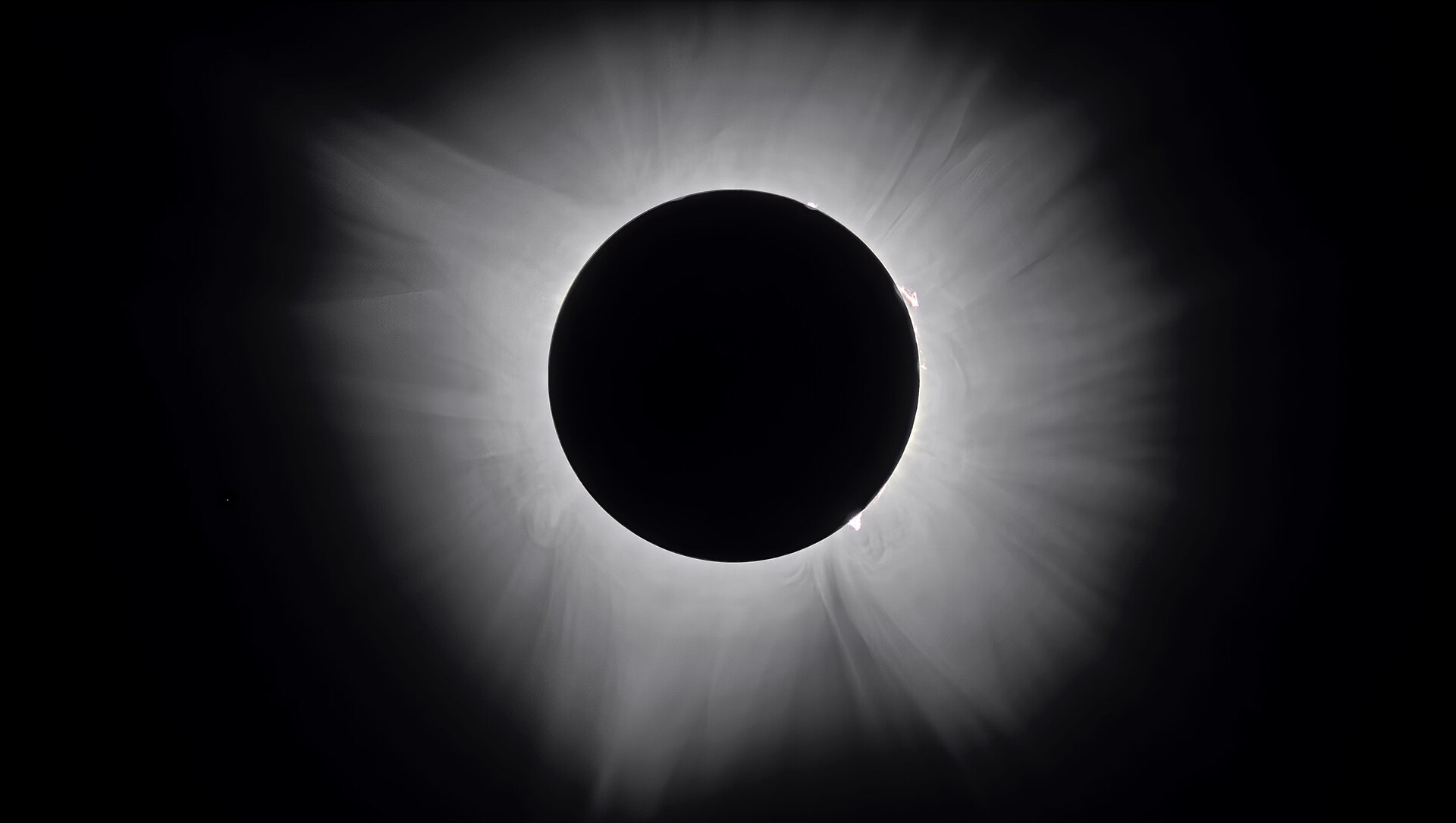

In 40 words. On August 12, 2026, at sunset, the Moon will completely cover the Sun over northern Spain and the Balearic Islands. It is the first total solar eclipse visible from mainland Spain since 1905. The next one arrives in August 2027.
The last time mainland Spain saw a total solar eclipse, television had not been invented. That was 1905. This Wednesday it happens again, and this time you have a phone, a car and this guide.
Where totality happens (and where it stays partial)
The path of totality, the strip where the Sun is covered 100%, enters from the northwest and crosses the country west to east. Totality covers much of Galicia (A Coruña, Lugo), Asturias, León, Palencia, Burgos, Soria, Zaragoza, Teruel and Castellón, plus the Balearic Islands. Cities like Oviedo, Burgos, Soria, Zaragoza, València and Palma sit inside or at the edge of the band.
Madrid, Barcelona and Seville get a very deep partial eclipse. The Sun becomes an orange fingernail, impressive on its own. But sudden night, the visible corona and stars at half past eight in the evening only happen INSIDE the band. If you can move, move.
What time it happens
The eclipse arrives at sunset, with the Sun already low. As a reference, official IGN times for A Coruña. It begins at 19:31, totality peaks at 20:28 and it ends at 21:22, with about 76 seconds of fully covered Sun. Times shift by a few minutes as you go east. Check your exact town at the official IGN tool.
The sky never sleeps.
Eclipses, meteor showers, launches… Every Sunday I send you the week’s sky events you can’t miss. Free.
The detail that can ruin everything, the horizon
Because the Sun will sit only a few degrees above the horizon during totality, not every spot works. You need a clear view to the west-northwest. One building, one hill or one line of trees in that direction and your eclipse is gone. Best picks are elevated viewpoints, open plains and the west coast. Arrive early, because half the country will be hunting the same horizon.
How to watch without damaging your eyes
- During ALL partial phases, wear eclipse glasses certified ISO 12312-2.
- Sunglasses, X-ray film and smoked glass do not filter the infrared that
- burns your retina painlessly. Our full guide, how to tell if your eclipse glasses are safe.
- Only during totality, that minute and a bit, you can and should look with
- your bare eyes. It is the only safe moment, and the most spectacular one.
The double feature, Perseids that same night
A total eclipse can only happen on a new Moon, so the night of August 12 will be truly dark, the best possible stage for the Perseid meteor shower, peaking those very days. One night, two shows, totality at sunset and shooting stars until dawn.
Missed it? Spain repeats in 2027
Spain chains three historic eclipses. On August 2, 2027 an even longer total eclipse crosses the south of the country, and on January 26, 2028 an annular one follows. If you are planning the trip of a lifetime, start with our 2027 Spain eclipse travel guide.
Frequently asked questions
Where is the August 12, 2026 total eclipse visible in Spain?
In a band crossing northern Spain west to east, including Galicia, Asturias, León, Palencia, Burgos, Soria, Zaragoza, Teruel and Castellón, plus the Balearic Islands. The rest of Spain sees a deep partial eclipse.
What time is the total solar eclipse on August 12, 2026?
At sunset. In A Coruña it starts at 19:31, totality at 20:28 and it ends at 21:22 (IGN data). Times shift a few minutes by city, and the Sun will be very low, so find a clear west-northwest horizon.
Can I look at the eclipse without glasses?
Only during totality, the roughly 76 seconds when the Sun is 100% covered, and only inside the path of totality. At all other times you need ISO 12312-2 certified eclipse glasses.
When is the next total solar eclipse in Spain?
August 2, 2027, crossing the south of the country with a much longer totality, followed by an annular eclipse on January 26, 2028.
Sources
The sky never sleeps.
Eclipses, meteor showers, launches… Every Sunday I send you the week’s sky events you can’t miss. Free.